Unusual options flow, as it prints
Sweeps, blocks, and whale-sized bets, ranked by a Flow Score leaderboard.
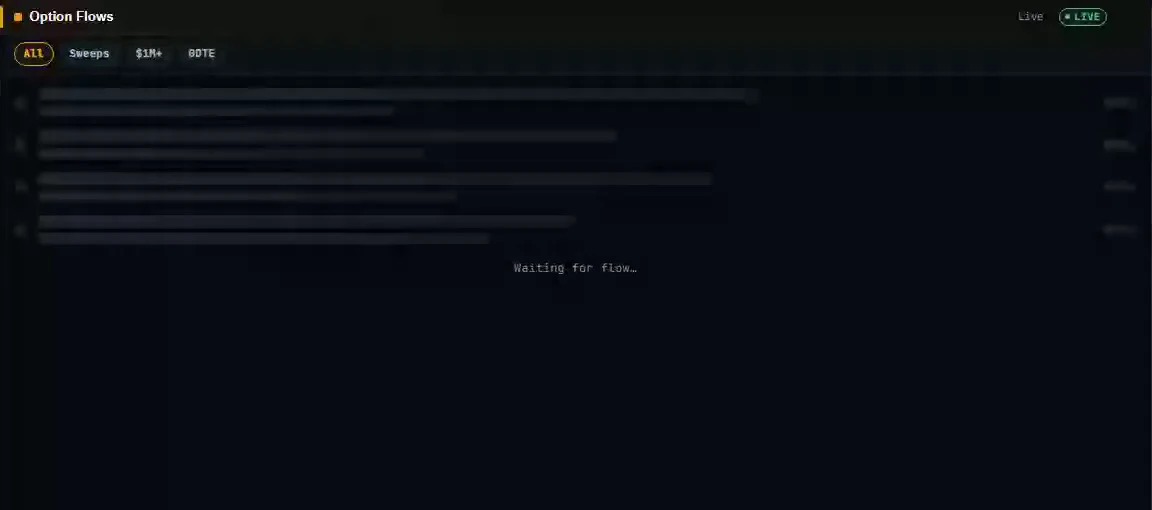 Real terminal UI · illustrative sample data
What counts as unusual options activity?
A print gets flagged when its volume runs far above the open interest already sitting at that strike, or when the way it fills points to one buyer pushing size through fast rather than the usual back-and-forth of market making. OpticAlpha reads every qualifying trade as it hits the tape and stamps it with one of four tags, so you can scan a row and know what you are looking at without reading the fine print. A sweep is an order sliced across multiple exchanges to fill immediately, which usually means the buyer wants the position on before price moves against them. A block is a single large print, often negotiated off-exchange or filled against a resting institutional order. Unusual covers anything with volume well past open interest that doesn't fit either of those patterns. And a whale tag marks the largest premium prints of the day, regardless of whether they filled as a sweep or a block.
Open interest is the anchor for all of it. A thousand-contract order against ten thousand open contracts is routine flow passing through a liquid name. The same order against three hundred open contracts is new money showing up where the position wasn't already crowded, and that is usually worth a second look. Size on its own doesn't tell you that story. Size measured against what was already there does.
What OpticAlpha shows
Live flow feed
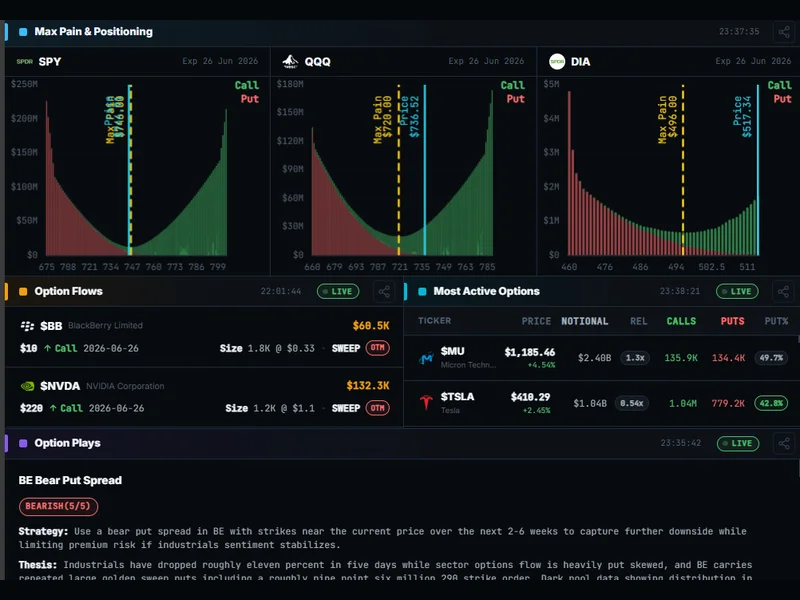
Every qualifying print streams in as it fills, tagged Sweep, Block, Unusual, or Whale, with ticker, strike, expiry, and premium on one row. The feed keeps a rolling window of the most recent 100 trades so you can scroll back through the session without losing the thread.
Flow Score leaderboard
Every ticker touched by today's flow, ranked by net bullish or bearish premium and graded from Strong Bullish to Strong Bearish, so the day's real lean is visible without scrolling the raw tape yourself.
Active options table
The top 25 tickers by dollar notional for the day, ranked with PUT% skew and relative notional side by side, so you can tell a name that is genuinely busy from one that is just acting like itself.
How traders use this
This is the raw flow that options traders lean on to catch institutional positioning before it shows up in price. A whale-sized sweep on a short-dated, out-of-the-money call in a name that wasn't otherwise active is the kind of print that gets a ticker onto a watchlist fast. Nobody pays up for immediate fills on size like that without a reason, and the reason is usually a directional bet on news the rest of the market hasn't priced in yet.
The Flow Score leaderboard is the fast way to triage a busy session. Instead of scanning a hundred rows of raw prints, it ranks every ticker the day's flow actually touched by net bullish or bearish premium, so the names carrying real conviction sit at the top before you've read a single strike price. See how it's calculated →
Put/call skew tells you the mood of the day. A PUT% reading above 60% on the active table points to broadly bearish positioning across that session. Relative notional does the same job for size: it compares today's dollar flow in a name against what is normal for it, so a stock running three times its usual notional on an otherwise quiet day means more than the same multiple on SPY, which trades heavy every single day regardless.
Terms on this page
- Sweep
- An options order split across multiple exchanges to fill quickly, usually signaling the buyer wants urgency over the best price.
- Block trade
- A single large options print, often negotiated privately or filled against a resting institutional order.
- Whale
- OpticAlpha's tag for the largest premium prints of the day, regardless of whether they filled as a sweep or a block.
- Open interest (OI)
- The number of options contracts at a given strike and expiry that remain open. Volume far above OI is one signal of new, not closing, activity.
- Flow Score
- A per-ticker ranking of net bullish versus bearish options premium for the day, weighted by sweep ratio and directional delta bias.
- Notional
- The total dollar value of an options trade or a day's flow in a ticker, used to rank which names are seeing the most real money move.
- Put/call skew
- The share of flow going to puts versus calls. A PUT% reading above 60% on the active table suggests broadly bearish positioning that day.
Questions traders ask
What counts as unusual options activity?
A trade is flagged unusual when its volume runs well above open interest, or when its size and structure suggest one buyer or a coordinated group is behind it rather than routine market making. OpticAlpha tags each print as Sweep, Block, Unusual, or Whale so you can tell the difference at a glance without reading every row's details.
What is a sweep versus a block trade?
A sweep is an order that gets sliced across multiple exchanges to fill fast, usually because the buyer wants the position on before price moves against them. A block is a single large print negotiated off-exchange or through a large resting order. Sweeps tend to signal urgency; blocks can be either urgency or a hedge from a large fund.
What is the Flow Score leaderboard?
A ranked list of tickers by net bullish or bearish options premium today, weighted by the sweep-to-total ratio and the flow's delta bias. It's a way to see which names the day's flow is actually leaning on without scrolling the raw feed yourself, graded from Strong Bullish through Strong Bearish.
How current is the options flow feed?
Flow prints stream in continuously through the trading session, with each row timestamped to when the trade hit. The feed keeps the most recent activity at the top and holds a rolling history so you can scroll back through the session.
What are Option Plays?
Short, AI-generated trade ideas built from the same live flow data on the tab: a strategy line (the actual structure, like a debit spread or an iron condor) and a thesis line explaining what in the flow prompted it, tagged bullish, bearish, or neutral with a confidence read. They're a starting point for your own research, not a signal to copy blindly.
Related reading
See unusual flow the moment it prints
14-day free trial. No credit card required.
20+ live channels · $10.50/mo billed annually