Three screens for three different options strategies
0DTE contracts, premium-selling strikes, and earnings plays, each screened and ranked market-wide.
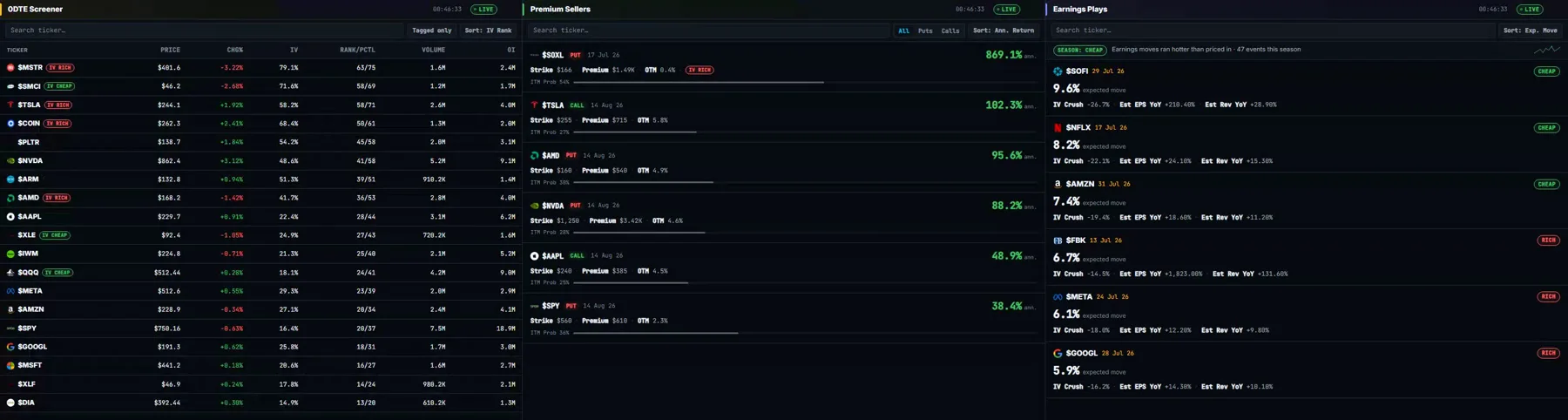 Real terminal UI · illustrative sample data
What are the options screeners?
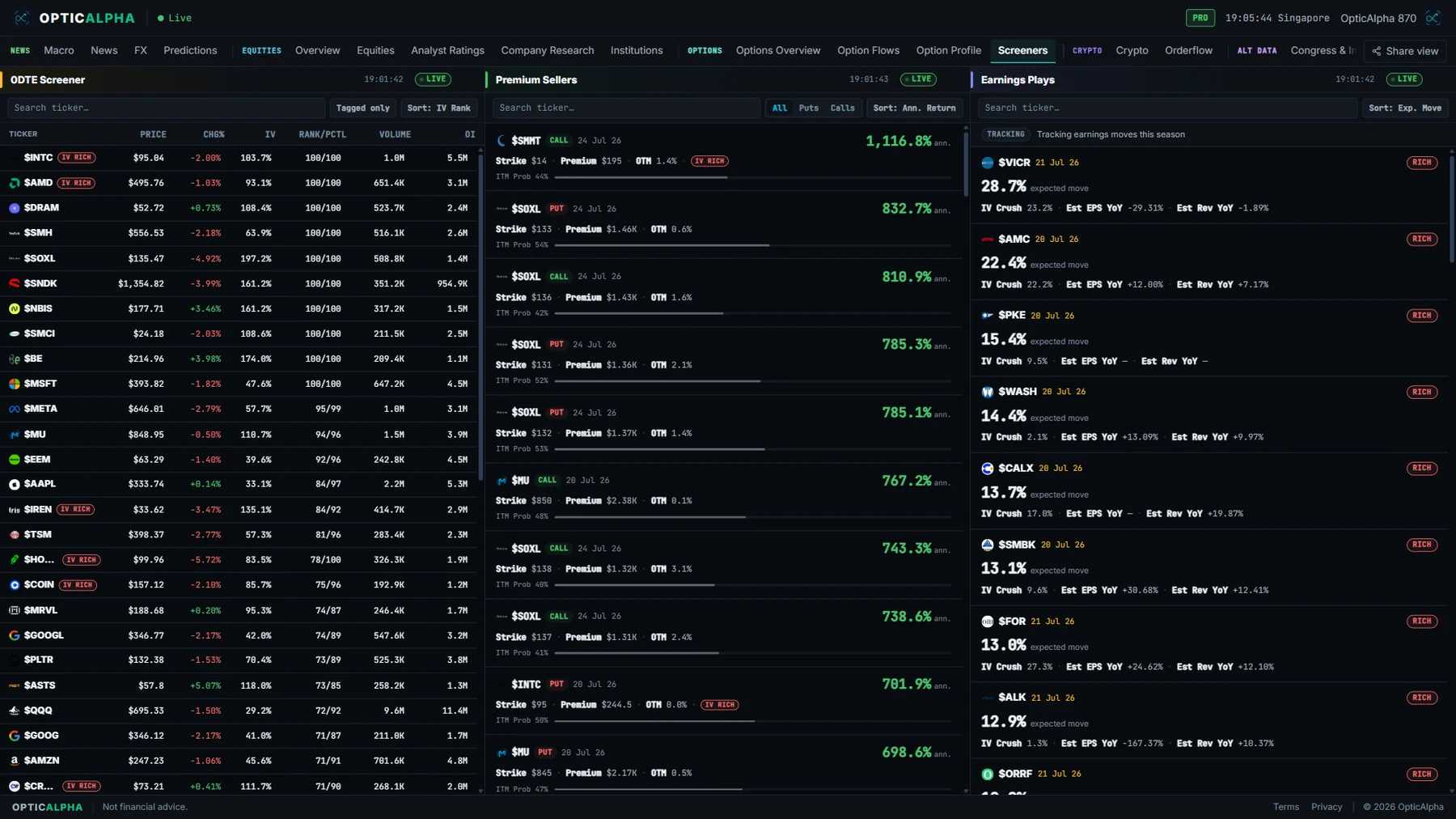
Three independent market-wide scans in one tab, each built for a different options strategy rather than a different ticker. The 0DTE screener finds contracts expiring today, ranked by volume by default, with IV rank and IV percentile shown per name so you can see whether that ticker's options are pricing rich or cheap against its own history before you pick a side. A Tagged Only filter narrows the list down to names also carrying a mispricing flag, useful once the full scan gets long enough that scrolling name by name stops being practical.
Premium Sellers screens strikes for selling cash-secured puts or covered calls, a Put/Call toggle switches which strategy you're looking at, ranked by annualized return so strikes with very different premiums and expirations land on the same comparable scale. Each row carries an ITM-probability bar underneath it, the quick read on how likely that strike is to actually finish in the money by expiration.
Earnings Plays screens upcoming earnings names by expected move size and tags each one RICH or CHEAP by comparing what its own options are currently pricing in for that move against what the stock has actually delivered after its own past reports. A rolling, market-wide earnings ledger strip sits above the list: a season-long stat on whether options overall have been running hot or cold into earnings this season, graded Rich, Cheap, or Calibrated.
Three strategies, screened market-wide
Not a single-ticker lookup. Each panel scans every qualifying contract across the market and ranks what's left.
0DTE screener
Every contract expiring today, ranked by volume, with IV rank and percentile shown per name so you can tell whether that ticker's options are pricing rich or cheap before you pick a side. A Tagged Only filter narrows the list to names also carrying a mispricing flag.
Premium Sellers
Strikes for selling cash-secured puts or covered calls, ranked by annualized return with an ITM-probability bar and OTM distance on every row. A Put/Call toggle switches which strategy you're screening.
Earnings Plays
Upcoming reports ranked by expected move size, each tagged RICH or CHEAP by comparing that name's current options pricing against its own historical realized move after past earnings.
The earnings ledger
A rolling, market-wide season stat sitting above the Earnings Plays list: whether options overall have been running hot or cold into earnings this season, graded Rich, Cheap, or Calibrated. It's the backdrop for judging any single ticker's tag, not a read on one name.
The screeners tab, as it actually looks
How traders use this
0DTE is for pure same-day directional or gamma plays, contracts that will be worth zero or a multiple of what you paid by the closing bell. IV rank is the gut check before you enter: a high reading means you're paying up for exposure that's already priced rich against that ticker's own recent range, a low reading means the same exposure is comparatively cheap.
Premium Sellers is built for income-generation strategies, selling puts or calls for the credit rather than buying for direction. Annualized return is what makes very different strikes and expirations comparable on the same footing, since a small return over a few days and a larger one over a month aren't actually close once both are scaled the same way. The ITM-probability bar underneath each row is the fast answer to the only question that matters before you sell: how likely you are to actually get assigned.
Earnings Plays works on two levels at once. The RICH or CHEAP tag on a row tells you whether that specific ticker's setup is priced fairly against its own history, while the season ledger strip above the list tells you whether the whole market's earnings options have been running hot or cold lately. Check the ledger before trusting any single ticker's tag: a RICH read means less if options across the board have been running rich into every report this season, and more if that name is the outlier.
Terms on this page
- 0DTE
- Zero days to expiration: a contract expiring the same trading day, the fastest-moving and highest-theta-decay corner of the options market.
- Annualized return
- A premium-selling strike's return on capital if the same trade could be repeated at the same rate for a full year. Used to compare strikes across different expirations on equal footing.
- ITM probability
- The modeled probability a short option finishes in-the-money at expiration, the flip side of the probability it expires worthless and the seller keeps the full premium.
- IV rank / IV percentile
- Where a ticker's current implied volatility sits relative to its own trailing range. High IV rank means options are pricing rich versus that name's own recent history.
- Expected move
- The move options pricing implies for a ticker by a given date, derived from at-the-money option prices. Compared against historical realized moves to flag options running rich or cheap into an event.
Questions traders ask
What does the 0DTE screener rank on?
Contracts expiring today, ranked by volume by default, with IV rank and percentile shown per name so you can see whether that ticker's options are pricing rich or cheap relative to its own history before picking a side. A Tagged Only filter narrows the list to names also flagged by other signals on the terminal, useful once the full list gets long.
What is Premium Sellers screening for?
Strikes for selling cash-secured puts or covered calls, ranked by annualized return, with an ITM-probability bar and OTM distance shown per row. A Put/Call filter switches between the two strategies, since selling puts and selling calls are different bets with different risk profiles.
What is the earnings ledger strip on the Earnings Plays panel?
A rolling, market-wide season stat comparing what options priced in for expected moves against what actually happened once results came out, graded Rich, Cheap, or Calibrated. It's not about any single ticker, it's a read on whether options have been running expensive or cheap into earnings all season.
What does the RICH or CHEAP tag on an earnings row mean?
It compares that specific ticker's expected move, from its options pricing, against its own historical realized move after past reports. RICH means the market is pricing in more movement than that name has typically delivered; CHEAP means the opposite.
How current are the screeners?
All three screeners and the earnings ledger refresh on a scheduled poll roughly every 10 minutes, since each is a market-wide scan across every qualifying contract rather than a single-ticker lookup.
Related reading
Three screens, ranked market-wide, one tab
14-day free trial. No credit card required.
20+ live channels · $10.50/mo billed annually